


Fungus on the thumb (onychomycosis) always sneaks in unnoticed.First, the infection affects the skin of the toes, then spreads to the nail and, if not caught in time, spreads to the entire foot.Even in the early stages, treatment can take 2-3 weeks, so it is vital that the insidious fungus is recognized as soon as possible.Moreover, today the disease can be cured by various methods - both pharmaceutical drugs and proven folk recipes.
Symptoms and stages of toe fungus

Both men and women are at risk of onychomycosis - everyone who wears tight closed shoes, regularly visits the pool and sauna, and likes to relax on public beaches in the summer.
Children are the least likely to suffer from onychomycosis, and after the age of 60 every second person has an infection.Weak immunity, chronic diseases, endocrine disorders are to blame...
Fungal infection is a disease with many faces.There are several types of fungi, and each pathogen causes different symptoms.To understand if you have become a victim of fungus, you need to take a closer look at your thumb, examine the skin around and between the fingers.
The following symptoms will indicate that it is time for nail treatment:
- the skin on the legs becomes dry and cracked;
- small blisters filled with ichor appear between the fingers;
- thickening of the nail plate has begun;
- the nail has become brittle, crumbles and breaks;
- nails lost their shine, their usual shade and became uneven;
- yellow spots and stripes appear on the nail plate (these are dermophyte fungi);
- the nail suddenly turns green or black (mold);
- on the side, the nail plate started to turn yellow and lag behind the skin (yeast fungus);
- The nail began to grow under the skin and cause severe discomfort.
- Onychomycosis develops gradually, with each stage of the disease having its own symptoms.And although each pathogen also behaves differently at different stages, in general the stages of foot fungus can be represented as follows:
- Early stage.Here the fungus does not show at all.Sometimes the skin of the feet itches and starts to crack, and barely noticeable spots and stripes appear on the nail of the big toe.
- The second stage.The nail loses its healthy pink color, and the plate begins to deform (on the sides and edges).
- Advanced stage.The nail plate finally changes color, becomes thick and loose, and sometimes falls off.The skin of the toes and between the toes is affected.At this stage, the pathogen penetrates the body, so symptoms of intoxication appear.These are weakness, drowsiness, dysbacteriosis, weakened immunity.
Treatment with pharmaceutical drugs

If you find a fungus on your thumb, self-treatment is far from the best option.There are several types of this infection, and the medication you choose may not be effective against your particular type of fungus.Therefore, it is recommended to see a doctor who will prescribe tests and choose an individual course of treatment.
Before treating the disease with traditional medicines, it is necessary to destroy all escape routes of the pathogen.And for that - disinfect shoes, bedding, socks.Textiles can be boiled, outer shoes can be wiped inside with lemon, and indoor slippers should be thrown away.These methods will not only speed up healing, but also prevent you from infecting family members.
It will take 1-2 months to get rid of the yeast infection in the early stage.In advanced cases, treatment continues for up to a year or even more.
Foot fungus can be successfully treated with three groups of drugs:
- antimycotic varnishes;
- local preparations: ointment, cream, spray;
- drugs for oral administration.
Antimycotic varnishes for the treatment of fungi
Antifungal varnishes are recommended in the beginning, when the disease has not yet progressed.
The main advantage of medical varnishes is versatility.They can be used for prevention, treatment of existing fungi, and even for removal of the diseased part of the nail.Some medicines can be applied not only to the nail, but also to the painful skin of the feet.The only drawback of these funds is their high price.
Most antifungal varnishes fight against several types of fungi at once.It takes from 2 months to a year to cure all symptoms of the infection.
Creams and ointments for the treatment of fungi
The use of ointments and creams for onychomycosis is the most effective and simplest way.To completely get rid of the infection at home, it will take up to a year (depending on the stage of the disease).Doctors recommend changing the ointment (or alternating) every 14 days, otherwise the fungus will get used to the medicine and there will be no effect.When all symptoms disappear, it is necessary to continue the treatment for another 2 weeks in order to consolidate the effect of the drug.
Antifungal drugs for oral administration
In advanced forms of onychomycosis, it is pointless to treat the disease only with ointments and varnishes - the fungus has already penetrated the blood.In this case, the doctor prescribes antifungal drugs and immunomodulators.
Treatment with home remedies
You can cope with big toe fungus at home not only with pharmaceutical varnishes and ointments.In the early stages, folk, "grandmother's" methods will be quite effective.
But it is important to understand that treatment with folk remedies, although cheaper, will take longer than the use of antifungal varnishes and special creams and ointments.
Traditional medicine methods are widely used in the treatment of fungal infections.It is recommended to use them as additional measures to the main treatment.I cannot substitute medicine.
Common recipes:
- The simplest method of treatment at home is cauterization with iodine.You just need to apply iodine to the nail plate and surrounding skin with a cotton swab 2 times a day (in the morning and before bed).Don't forget: iodine dries out your skin.Therefore, every week it is better to take a short break and treat the fungus with other folk remedies.
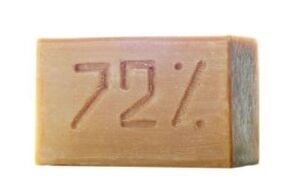
- If you catch the infection at a very early stage, you can treat it with a proven army method - laundry soap.We just grate a regular bar of soap on a coarse grater, dilute it in a bowl of hot water and arrange foot baths every evening.Until full recovery.
- The antibacterial properties of garlic are also great in fighting fungus.There are two garlic recipes you can use at home.The first is to rub the garlic until it becomes a paste, spread it on the sore nail, wrap it with film, and put a sock on top.Do it 2 times a week at night, antifungal course – six months.The second recipe is 2 crushed cloves of garlic per 100 grams of soft butter.Use in a similar way, but every evening, after washing.Use for 1-2 months.
- Treatment of mycosis of the big toe with folk remedies is impossible without peeling potatoes.We take fresh peels, boil them, drain the water and manually knead them directly in the pot.Then transfer the legs damaged by the fungus to a basin and scald them to clean them.After 15-20 minutes, wash off the remaining peels with potato broth and put on clean socks.Do this every night until the symptoms of the fungus disappear.
Vinegar essence, lemon poultices, aspen bark baths, herbal mixture of chamomile, violet and string, celandine, etc.they are also considered effective folk remedies for toenail fungus.
Big toe nail removal

If the fungal infection has already entered the second or third stage, the complete treatment must necessarily include the removal of the nail.You can remove the entire nail plate or just a part, and the new nail will grow smooth, pink and healthy.
Removing the nail plate using folk remedies requires special care and precision - complete sterility must be maintained so as not to introduce a new infection.Homemade keratolytics work in a similar way - they soften the nail plate infected with fungi and can be removed.The most popular recipes at home are soap and soda baths and birch tar poultices.
Nail removal is possible in different ways: at home, in hospitals or beauty salons.If you decide to carry out such a responsible procedure yourself, there are four options:
- keratolytic varnishes;
- special ointments and creams;
- keratolytic plaster mixtures;
- nail removal using folk remedies.
All varnishes, plasters, creams and other traditional medicines work on the same principle.A keratolytic mixture is applied to the steamed nail (depending on the instructions daily or several times a week), sealed on top and removed after some time.It is recommended to remove plasters once a day, ointments and creams - once a day or 3-4 days, varnishing - once a week.In this case, the damaged part of the nail is removed together with the product.
Don't forget: nail removal is not the whole treatment.The fungus itself lives and multiplies on the nail bed, so after removing the nail plate, you need to treat the sore finger with other antifungal drugs.Otherwise, the infection will become more active and infect the new, growing nail.
Fungus is much more difficult to cure than to prevent, so prevention of fungal infection must be carried out constantly.To do this, you must follow simple rules of hygiene.You should not wear someone else's shoes, use a separate towel for your feet, take only your own shoes into the pool, sauna and bathhouse, and disinfect them regularly.No matter what you wear - shoes, boots, sneakers - shoes should be comfortable, breathable, ideally made of natural materials.
It is also necessary to take care of your feet: cut your nails on time, prevent the nail from growing into the skin, and heal all cracks and small wounds in a timely manner.Also, check your fingers regularly for any suspicious symptoms.